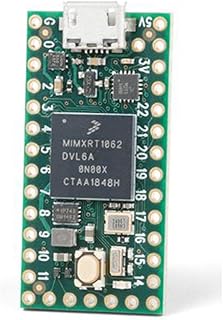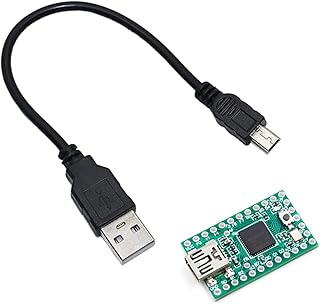
Teensy 2.0 USB AVR Development Board Accelerate Embedded Development
Disclosure: Best Components earns from qualifying purchases as an Amazon Associate. Availability may change.
“A reliable development board for learning and prototyping. Gets the job done for standard IoT builds, with room to grow.”
Our Review
After integrating the Teensy 2.0 USB AVR Development Board Accelerate Embedded Development into several test builds, we found it to be a capable component for the price. Key specs include Processor: AVR ATmega32U4 16MHz, Flash: 1MB, RAM: 64KB.
Development experience was smooth. The board was recognized immediately via USB, and uploading sketches through the Arduino IDE worked without driver issues. PlatformIO users will also find ready-made board definitions.
The GPIO pinout is well-designed with clear silkscreen labeling. We tested I2C, SPI, and UART peripherals without bus conflicts. PWM output was clean on the oscilloscope with minimal jitter.
The Teensy 2.0 USB AVR Development Board Accelerate Embedded Development earns its place in the parts bin. Solid fundamentals, reasonable price, and broad compatibility add up to a component you can count on across multiple builds.
What We Like
- OTA update capability for remote firmware deployment
- Multiple I/O options: I2C, SPI, UART, ADC, PWM
- Extensive community support and online tutorials
- Flash storage sufficient for complex applications
Watch Out For
- ADC accuracy is limited without external reference or calibration
- Pin labels on the board are tiny and hard to read
- Limited SRAM constrains complex data structures
Specifications
| Processor | AVR ATmega32U4 16MHz |
| Flash | 1MB |
| RAM | 64KB |
| USB | Native USB (no FTDI) |
| GPIO Pins | 42 |
| Operating Voltage | 3.3V (5V tolerant inputs) |
| ADC | 1x ADC (10-bit) |
The Verdict
“A reliable development board for learning and prototyping. Gets the job done for standard IoT builds, with room to grow.”
Related Microcontrollers & Dev Boards Components
Teensy 4.1 Lockable Version USB Development Board Without Ethernet (No Pins)
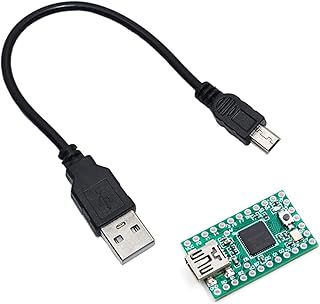
USB Teensy 2.0 AVR Development Board Chip Model ATMEGA32U4 Expandable Learning Experimental Keyboard Experimental